


Quote

Strait of Hormuz Outlook Remains Uncertain Despite Ceasefire
Apr. 8, 2026
Customer Advisory
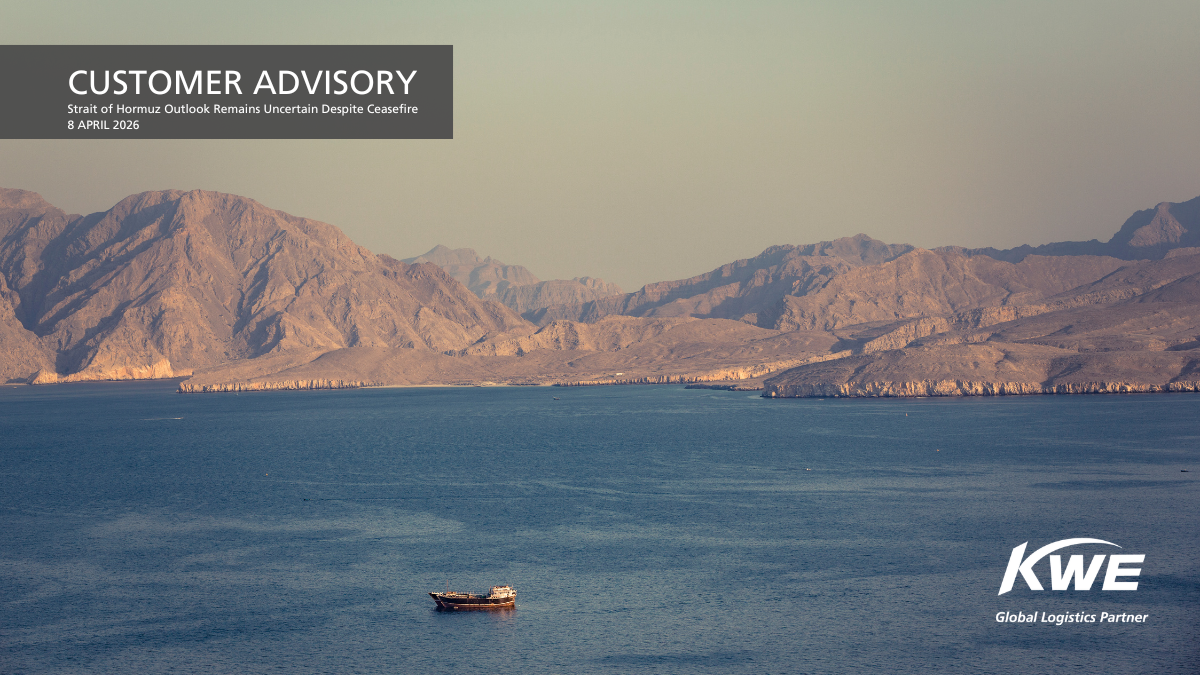
A recently announced ceasefire in the Middle East has reduced immediate escalation risks and raised expectations for the reopening of the Strait of Hormuz. However, conflicting positions between involved parties and continued disruptions indicate that conditions remain fluid.
Over the past several weeks, vessel movements through the Strait of Hormuz have been significantly restricted, with approximately 800 vessels delayed or unable to transit. This has disrupted the movement of crude oil, liquefied natural gas (LNG), and key petrochemical products.
While the ceasefire has led to a decline in energy prices and improved market sentiment, there are differing interpretations of the agreement. Recent statements from Iranian leadership allege violations of the ceasefire terms, while disagreements persist regarding how vessel traffic through the Strait should be managed—including the potential imposition of transit tolls.
As of now, tanker traffic through the Strait remains limited, with no clear indication of a full and immediate normalization of flows.
Operational Impact
- Vessel congestion remains across the Gulf following prolonged transit restrictions
- Backlogs of delayed shipments are expected to take time to clear, even if transit resumes
- Tanker traffic through the Strait continues at reduced levels, contributing to ongoing supply constraints
- Disruptions to oil, LNG, and petrochemical flows continue to impact global supply chains
- Damage to refining infrastructure in the region is expected to constrain fuel supply for months
- Even with a reopening of the Strait, downstream recovery—particularly for refined products—will take additional time
Although the ceasefire has eased immediate escalation concerns, uncertainty remains due to conflicting interpretations of the agreement between the U.S. and Iran, ongoing disputes over control and transit conditions in the Strait of Hormuz, and the unclear pace at which tanker traffic and maritime operations will normalize. The situation remains highly dynamic, and further developments may continue to impact both market conditions and operational flows.
Kintetsu World Express will continue to closely monitor developments across the region. Customers are advised to plan for continued delays and limited throughput in the near term, monitor developments closely as ceasefire conditions evolve, and maintain flexibility in supply chain planning where possible.
If you have any questions or would like to discuss contingency planning for your shipments, please contact your KWE representative.
Sources: