


Quote

Customer Advisory: Strait of Hormuz Reopens Under Ceasefire, Conditions Remain Uncertain
Apr. 17, 2026
Customer Advisory
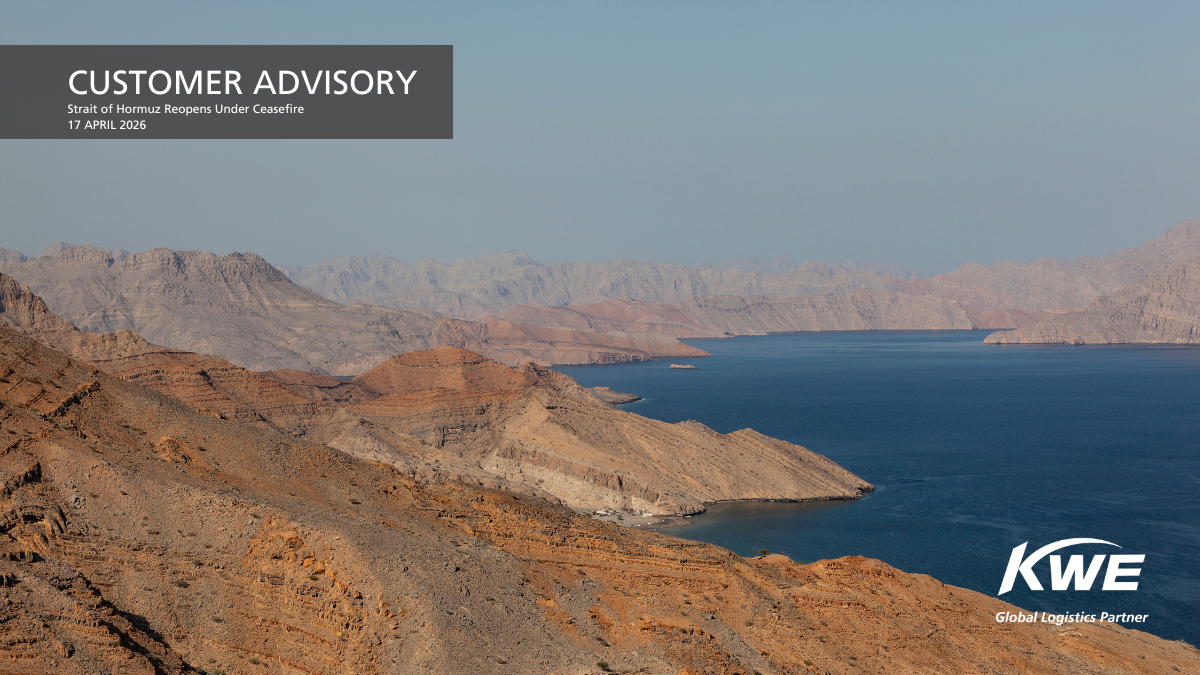
A temporary reopening of the Strait of Hormuz has been announced following a ceasefire agreement, though conditions for commercial shipping remain fluid and subject to change.
Key Updates
- Iran has declared the Strait of Hormuz “completely open” to commercial vessels for the duration of the current ceasefire
- A U.S. naval blockade remains in place, with broader negotiations ongoing and no final agreement yet reached
- Iranian sources indicate the Strait could close again if ceasefire conditions are not met, including compliance with routing and coordination requirements
Situation Overview
Iran has announced that the Strait of Hormuz—one of the world’s most critical maritime chokepoints—is open to all commercial traffic for the remainder of the truce. This follows weeks of severe disruption that left hundreds of vessels delayed or unable to transit the region.
While this development signals a potential easing of restrictions, the operating environment remains complex. The United States has confirmed that its naval blockade will continue until a broader agreement is finalized, and negotiations are still ongoing with unresolved points.
At the same time, Iranian state media has indicated that continued access to the Strait is conditional. Any perceived violation of the ceasefire—including the continuation of the blockade—could prompt a renewed closure. Additionally, vessels may be required to follow designated transit routes and coordinate movements with Iranian authorities.
Operational Impact
Despite the announcement, a rapid return to normal shipping conditions is unlikely in the near term:
- Vessel traffic may resume gradually as carriers assess safety and compliance requirements
- Routing restrictions and coordination protocols could introduce delays and operational complexity
- Backlogs from prior congestion are expected to continue impacting schedules
- Insurance costs and risk premiums may remain elevated
- Port congestion, equipment imbalances, and schedule disruptions are expected to persist even as transit resumes.
While the reopening represents a positive step toward restoring flow through the region, it does not yet signal full normalization. The situation remains highly sensitive to political and military developments, and conditions can shift quickly
KWE continues to monitor developments closely and is working with carriers and partners to assess routing options and minimize disruption where possible.
Sources: