


Quote

Aperture & Focus 2026: Week 33
Aug. 12, 2026
Aperture & Focus
Global Aperture
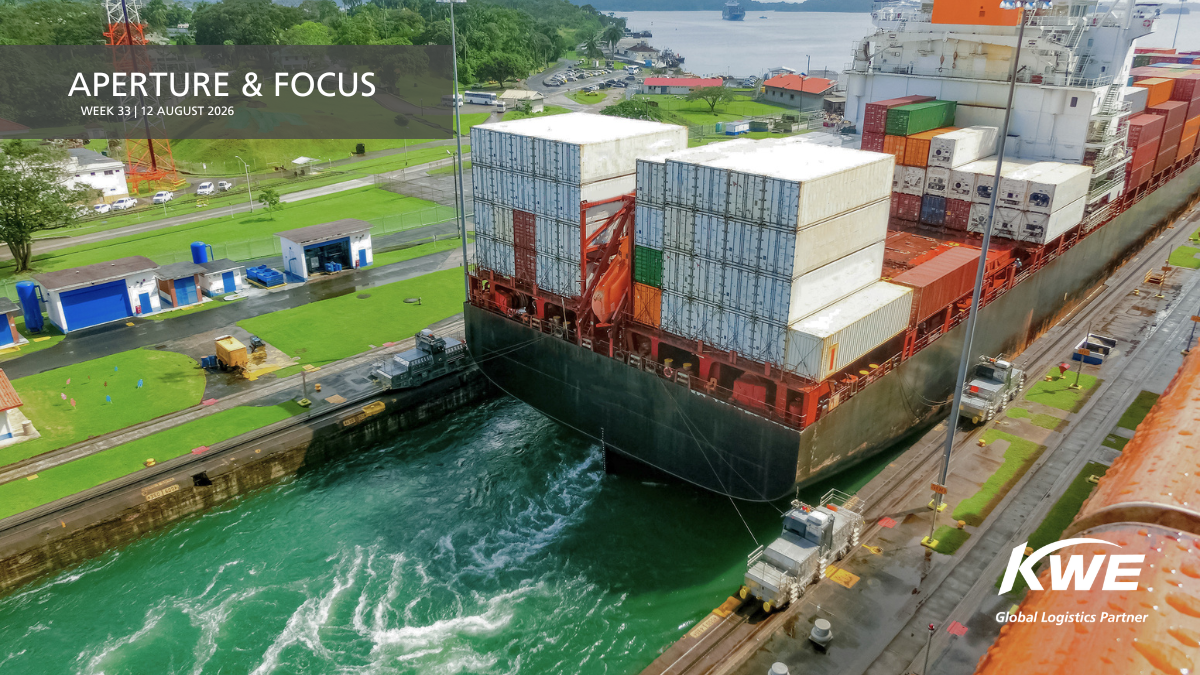
Panama Canal congestion has intensified, with some vessels waiting up to 10 days for transit as cargo is rerouted away from disrupted Persian Gulf shipping lanes. A container ship recently paid $4 million in an auction for priority passage, while lock maintenance and draft restrictions related to lower-than-expected rainfall continue to constrain canal capacity.
This news comes after an August 6th announcement that the Panama Canal Authority will further reduce maximum vessel draft limits to 48 feet on August 26 and 47.5 feet on September 3 as water levels in Gatun Lake continue to decline amid a strengthening El Niño. The reductions will not affect the number of daily vessel transits, but may limit vessel loading capacity as the canal continues managing water resources through the 2026 dry season.
Trade imbalances on major exports from Asia to global markets have continued to worsen, with four of six major backhaul trades now operating at 30% or less utilization, increasing the need for empty-container repositioning. The Far East–North America trade has reached a new normal of 26.7% backhaul utilization, while Far East–Europe has declined to around 30% and could deteriorate further.
Worldwide air cargo tonnage increased 5% year over year in July, down from June’s 9% increase as Asia Pacific, Europe and Middle East & South Asia markets weakened. China-Europe and Hong Kong-Europe volumes fell for a sixth consecutive week following the European Union’s removal of tariff-free treatment for goods valued below €150, contributing to a 9% month-over-month decline in combined July volumes on those lanes.
Regional Focus
Americas
United States: U.S. container imports are entering an earlier-than-usual peak season slowdown after retailers accelerated shipments ahead of tariff changes and supply chain uncertainty. Major ports handled 2.23 million twenty-foot equivalent units (TEUs) in June, up 13.2% year over year, while imports are forecast to decline through November but remain above 2025 levels.
The White House on August 10 extended a waiver of the Jones Act for another 90 days, allowing foreign-flagged vessels to transport oil and other commodities between U.S. ports amid disruptions to global crude flows caused by the war with Iran. The extension narrows the relief by requiring individual voyages to receive case-by-case approval, rather than blanket exemptions, while supporting continued access to gasoline, diesel and jet fuel.
Mexico: Mexico’s air cargo market grew 4.7% year over year in the first half of 2026, reversing their decline throughout 2025 as stronger international trade with the United States and Asia boosted demand. International cargo increased 7.1%, while Felipe Ángeles International Airport (AIFA) grew 6.4% and continued to strengthen its role as Mexico’s primary cargo hub.
Colombia: Following the August 10 earthquake in western Colombia, container operations at the Port of Buenaventura were disrupted as terminals conducted safety inspections and recovery efforts. While some port facilities have begun restoring operations, road restrictions and terminal limitations continue to affect cargo movements between Colombia's Pacific gateway and the country's interior.
Asia-Pacific
Japan, China: Typhoon Dolphin struck Japan’s Okinawa prefecture on August 8 before making landfall in China’s Zhejiang province on August 9, disrupting transportation across both countries. Okinawa experienced power outages and flight cancellations, while in China, ports and ferry services were suspended ahead of the storm and Shanghai’s two airports later canceled 943 flights, reducing air capacity by nearly 40%.
Europe, Middle East & Africa
Europe: Water levels on the Rhine River fell to a record low at Kaub, Germany, on August 11, further restricting barge traffic along one of Europe's most important freight corridors. Companies across the region are shifting cargo to rail and truck transport as reduced vessel capacity and limited access to loading points continue to disrupt the movement of industrial goods, energy products, and raw materials.
Middle East: Vessel traffic through the Strait of Hormuz fell to 33 ships from Monday through Thursday this week, down from 50 during the same period a week earlier, as operators remain cautious amid ongoing security, sanctions and insurance concerns. Proposed arrangements to facilitate vessel transit remain complicated by U.S. sanctions and insurance restrictions, leaving the key waterway operating well below normal levels.