


Quote

Aperture & Focus 2026: Week 36
Sep. 3, 2026
Aperture & Focus
Global Aperture
Global container shipping schedule reliability fell to 56.4% in July, down 6.1 percentage points from June and the lowest level recorded in 2026, according to analytics firm Sea-Intelligence. Average delays for late vessel arrivals also increased to 6.06 days, the longest since January 2024, signaling continued schedule disruption across major trade lanes.
Air cargo demand increased 3.9% year over year in July, extending growth across all regions but slowing from the stronger gains recorded earlier in 2026. Asia-Pacific, Europe and North America accounted for more than 90% of the overall increase, while capacity grew 1.7%, indicating continued demand growth but with less momentum than earlier in the year.
The United States launched a new series of strikes against Iranian targets on September 1 following renewed tensions and attempted attacks on commercial shipping in the Strait of Hormuz. The escalation raises further risks for commercial vessels and cargo moving through the region, particularly as peace talks remain stalled and Iran has warned of potential retaliation.
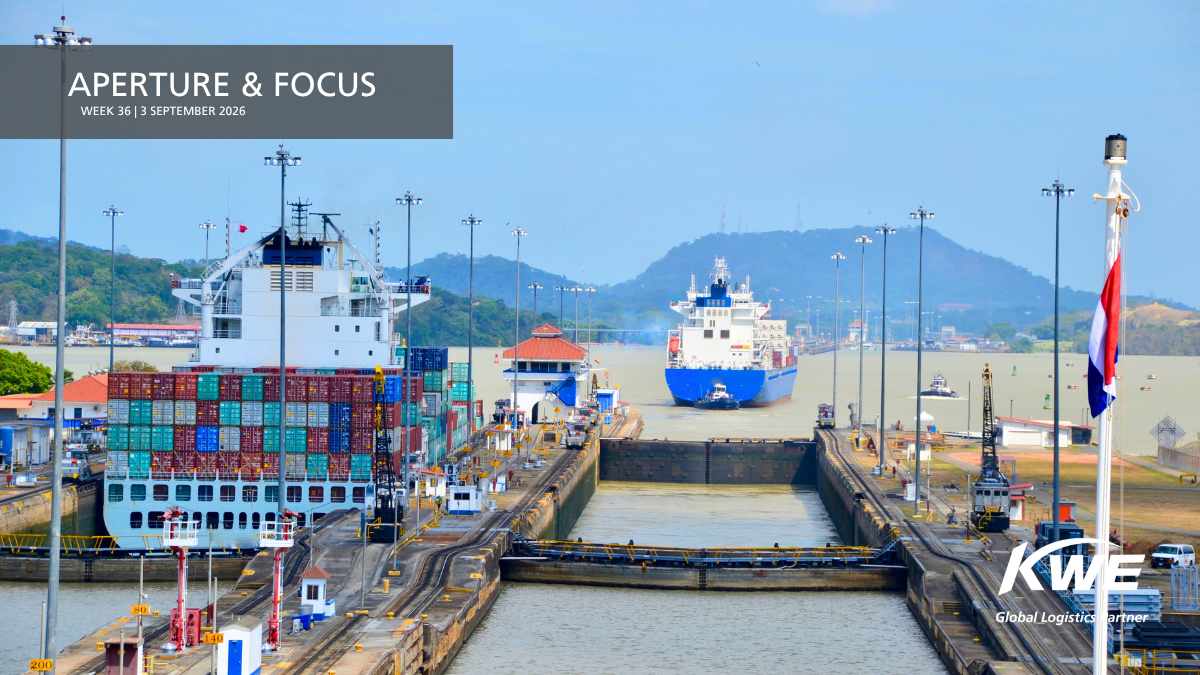
Strengthening El Niño conditions are raising concerns that worsening drought could further constrain Panama Canal operations through early 2027. The Panama Canal Authority will reduce transits of the larger and more modern Neopanamax vessel transits to nine daily slots beginning September 3 and the smaller Panamax vessel transits to 23 daily slots from September 15, increasing the risk of delays and tighter capacity as the dry season continues.
Regional Focus
Americas
Mexico: In response to increased freight movements through Nuevo León since 2022, the state announced plans for major investments in border crossings, highways and industrial infrastructure to expand cross-border trade with Texas. New freight crossings and industrial zones in Laredo, near the Colombia-Solidarity International Bridge, are intended to add capacity and support growing nearshoring activity along the United States-Mexico corridor.
Asia-Pacific
China: Typhoon Saudel made landfall on China’s eastern coast on August 28, forcing Shanghai and Ningbo-Zhoushan to suspend port operations and adding to congestion following repeated weather disruptions since July. Although both ports resumed operations on Friday, accumulated backlogs and vessel bunching are expected to continue causing congestion and schedule reliability challenges across China and neighboring markets. As of September 1, vessels are waiting up to 10 days for berths, with an estimated 3.92 million TEU of global container capacity tied up.
India: A strike by empty-container yard operators has disrupted container movements at Mundra Port since August 28, with an estimated 5,000 containers per day being held up. The dispute has suspended empty-container allotments and gate-ins, creating risks of missed vessel cut-offs, shipment rollovers, and delays for importers and exporters using the port.
Korea: Detailed regulations have been introduced by Korean officials to establish green shipping corridors under a new law that will take effect on April 1, 2027. The framework will define qualifying low- and zero-carbon fuels, environmental requirements for ports and procedures for creating green corridors, while the government also plans to support the green conversion of 889 vessels through 2035.
Europe, Middle East & Africa
Europe: Dedicated freighter capacity from Asia Pacific to Europe fell 15% between late June and August following the European Union’s new low-value import rules, while China-Europe air cargo volumes remained significantly below year-earlier levels. Combined mainland China and Hong Kong-Europe volumes increased 1% week over week in the week ending August 23, the first increase since early June, suggesting demand may be beginning to stabilize at a lower level.
Despite Rhine River water levels having risen following recent rainfall, shipping disruptions continue after the river reached record lows earlier in August. The gauge at the key Kaub chokepoint reached 72 centimeters on August 31, up from 60 centimeters on August 28, but remains well below the roughly 1.5 meters needed for fully loaded vessels, forcing some ships to sail part-loaded and shifting freight to road and rail.
Germany: Following the failed drone strike on August 14 at Leipzig/Halle Airport that German and European officials described as a “Russian hybrid attack,” Germany has announced new security measures. European Union and NATO leaders expressed solidarity with Germany on September 1 and said additional measures, including possible sanctions, would be considered in response.